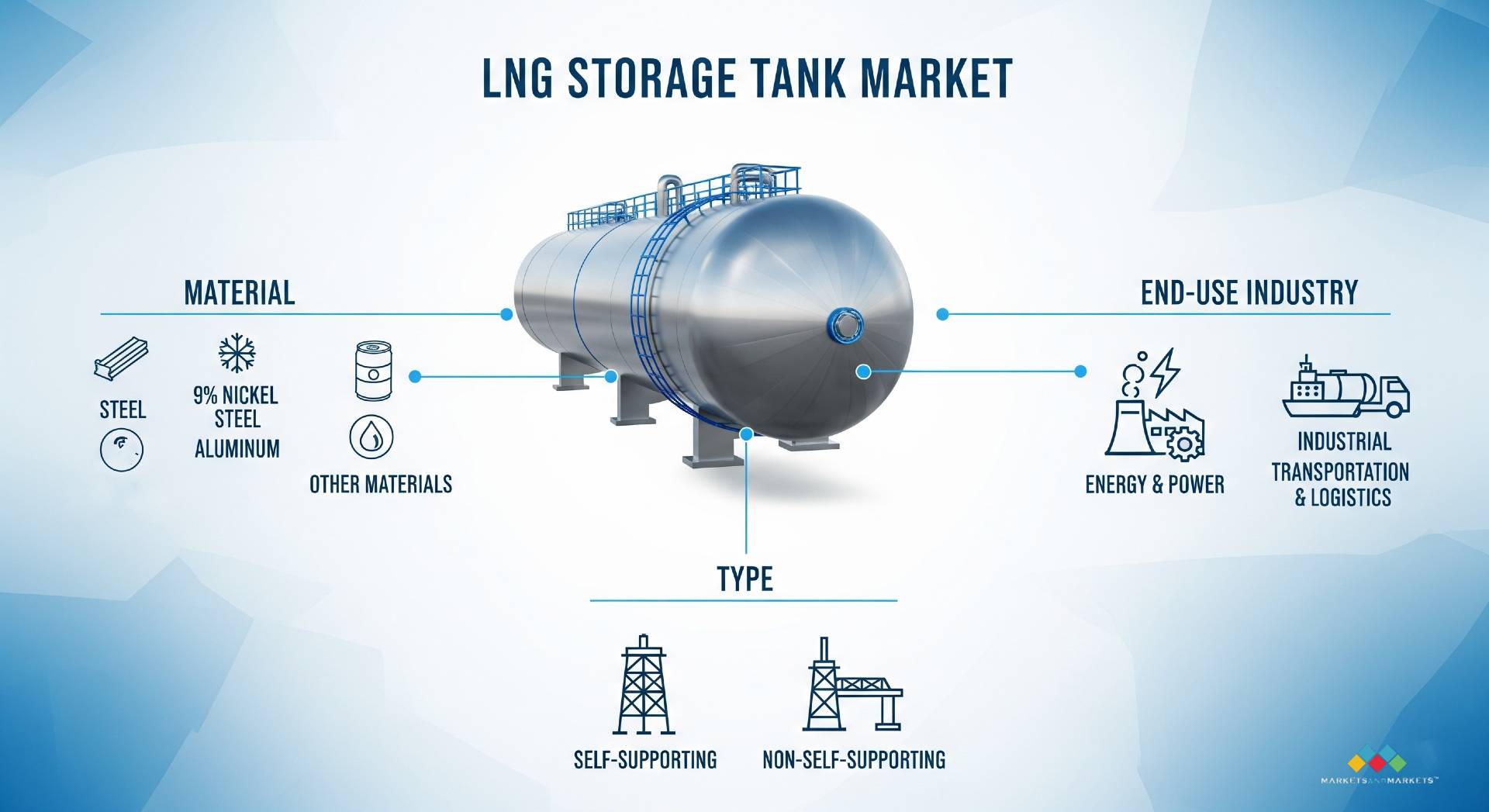
The LNG storage tank market is witnessing dynamic growth, driven by the global surge in liquefied natural gas demand for power generation, industrial use, and energy transition goals. Understanding market trends, key drivers, and technological advancements in LNG storage tank infrastructure is critical for stakeholders, investors, and industry participants looking to capitalize on expanding opportunities for Upcoming years.
What Is an LNG Storage Tank?
An LNG storage tank is a highly specialized cryogenic vessel designed to store liquefied natural gas at temperatures as low as -162°C. These tanks play a crucial role in LNG supply chains, enabling efficient storage and transportation of LNG to diversified markets. There are several types of LNG storage tanks including membrane, self-supporting, and floating storage tanks, each serving specific operational requirements.
Market Overview and Size Outlook
The LNG storage tank market size is forecasted to expand significantly from 2025 to 2035, The LNG Storage Tank market is projected to reach USD 21.22 billion by 2029 from USD 14.64 billion in 2024 . Fueled by increased LNG liquefaction projects, regasification terminal expansions, and small-scale LNG infrastructure development worldwide. growth driven by increasing LNG demand worldwide, especially in power generation and industrial sectors. The advancements in LNG storage technology, such as improved cryogenic insulation and innovative tank designs, are key factors enhancing market expansion. It emphasizes the growing adoption of Floating Storage Regasification Units (FSRUs) and small-scale LNG storage solutions to meet the rising energy needs in emerging regions. Furthermore, strategic investments in LNG infrastructure across Asia-Pacific, North America, and Europe are expected to fuel market growth, with a compound annual growth rate 7.7% (CAGR) reflecting strong investor confidence through 2034.
Key factors propelling market growth include:
- Rising demand for clean fuel alternatives during the energy transition.
- Expansion of LNG import/export terminals requiring advanced storage solutions.
- Increased adoption of Floating Storage Regasification Units (FSRU) for flexible LNG supply.
- Growth in LNG bunkering for marine fuel.
Types of LNG Storage Tanks
Membrane LNG Storage Tanks
Membrane tanks feature a thin, flexible metallic membrane supported by insulated concrete or other materials, making them ideal for large-scale industrial applications. Membrane tanks offer high storage capacity and are prevalent in LNG terminals worldwide.
Self-supporting LNG Storage Tanks
These tanks use pre-stressed concrete or nickel steel as construction materials, providing robust insulation and structural strength. They are widely used in onshore LNG storage facilities requiring enhanced durability.
Floating LNG Storage Tanks
Used mainly in offshore applications, floating LNG storage tanks combine storage and regasification capabilities. They facilitate LNG supply in regions lacking fixed onshore infrastructure.
Trending Technologies and Innovations
Advancements in LNG storage tank insulation materials and safety standards are crucial to improving operational efficiency and reducing boil-off gas losses. Recent developments include:
- Enhanced vacuum insulation systems.
- Improved nickel steel alloys and aluminum alloys in tank construction.
- Digital monitoring for predictive maintenance and safety.
Regional Market Insights
- Asia-Pacific dominates due to heavy investments in LNG infrastructure across China, Japan, South Korea, and India.
- North America sees rapid growth fueled by increasing LNG exports from the U.S.
- Europe focuses on upgrading LNG terminals to secure diversified energy sources.
Download the Detailed Market Analysis (PDF) :
The global LNG storage tank market stands at the forefront of fueling the evolving energy landscape with expanding capacity, innovative technologies, and strategic regional growth. Businesses and investors tapping into this sector can benefit from understanding the comprehensive market dynamics and technological progress shaping LNG storage infrastructure


